


Verily Me
4.595.00 Reviews
App Specs
- Version
- 3.8.21
- Updated On
- License
- Free
- Downloads
- 100,000+
- Developer
- Verily Health Inc.
- Categories
- Medical
- Platform
- Android
Screenshots
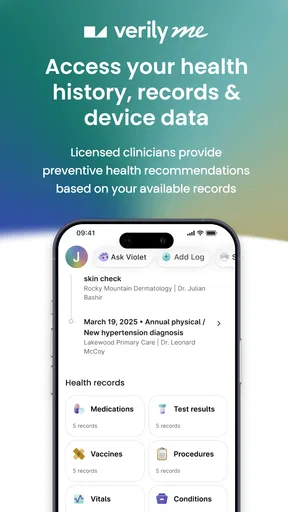
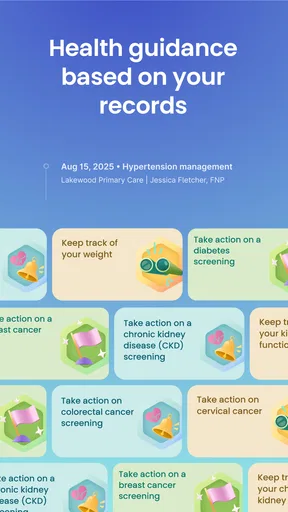
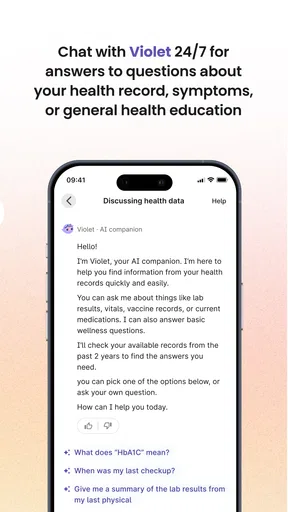
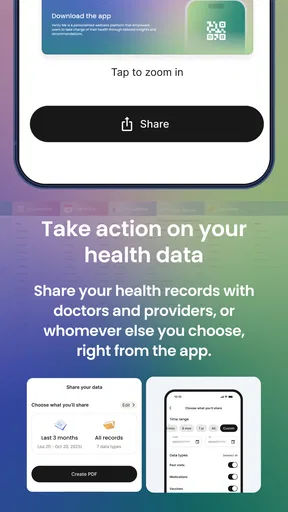
 Analysis by AppCompare
Verily Me is the kind of medical app that makes a strong first impression because it tries to give your health information one home instead of scattering it across separate tools, messages, and notes. I found the idea appealing immediately: open one app, check what matters, and use it as a regular point of reference rather than treating health management as a collection of disconnected tasks. The developer behind it is Verily Health Inc., and the app is free to use.
That convenience is also the central question. A health app can be interesting for a week and still fail to earn a permanent place on a phone. In my experience, the lasting value of Verily Me depends less on novelty and more on whether you already have a recurring reason to return. It is best approached as a personal health companion, not as a replacement for a clinician, an urgent-care service, or a dedicated medical device.
What the first week feels like
The first few days are mainly about understanding how the app fits into your existing routine. The store presents it as one app for unlocking your health, and that description makes more sense when you think of it as a central starting point rather than a single-purpose tracker. I would not install it expecting one dramatic feature to change the way I manage my health overnight. Its appeal is the possibility of bringing useful health activity into a more organized space.
That makes the first-week experience especially relevant for people who already feel that their health information is fragmented. If you switch between separate apps, paper instructions, appointment reminders, and personal notes, a unified medical app can reduce the mental effort of remembering where something belongs. The benefit is not necessarily excitement; it is the quieter feeling that health-related tasks have a consistent place.
One practical way to test it is to begin with a single recurring need instead of trying to make it your entire health system immediately. For example, someone preparing for a routine appointment could use the first week to establish a simple review habit: check the app at a predictable time, identify what needs attention, and keep questions for the next conversation with a professional. This approach is less overwhelming than opening every section at once and then abandoning the app when the initial enthusiasm fades.
I also think the app’s mature age rating matters when deciding who should use it. Verily Me is marked Mature 17+, so it is not something I would casually hand to a younger teenager as a general wellness tool. Adults should also remember that an age label is not a medical qualification. It tells you how the app is classified, not whether every health situation is suitable for self-management.
The current release is version 3.8.13, and the app requires Android 8.0 or later. That makes device compatibility an early checkpoint rather than a detail to discover after building a routine around it. On a supported phone, the initial setup should be judged by one simple question: does the app make your next health-related action clearer, or does it add another place to maintain?
Worth Reading Before You Choose

EA SPORTS FC Mobile 26 Is a Bigger Football Game, but It Takes Time

Flipboard Shows What News Apps Must Do Beyond the Feed

Switching to Android Auto Means Rethinking Your Driving Routine

Google Calendar Makes a Crowded Week Easier to Manage

Ludo King Makes the Most of the Minutes Between Plans

Baby Panda World Brings Quick Play to Modern Phones, but Its Game Library Feels Busy
Who gets the quickest benefit
Verily Me is most promising for adults who want a regular health reference point and are willing to spend a little time organizing their habits. It can also suit people who dislike juggling several health tools and would rather start from one medical-focused app. The strongest use case is not a one-off glance; it is a repeated workflow in which the app helps you prepare, review, or keep track of information you already need to manage.
Someone with a busy schedule may appreciate that kind of consolidation. Imagine a weekday morning when you are preparing for an appointment later in the week. Instead of relying on memory, you can make the app part of a short review ritual, note what deserves attention, and arrive better prepared. The value comes from reducing forgotten details and last-minute searching, not from turning a few taps into a diagnosis.
On the other hand, I would skip it if you want a narrowly focused fitness tracker, a replacement for a glucose meter, or an emergency medical service. Those needs call for specialized tools and professional support. A broad health app can be useful beside them, but it should not be mistaken for the thing that performs the clinical job.
Why the second month matters more than the first
After the first month, the question changes from “What can this app do?” to “What do I return for?” That is where many health apps lose their appeal. A polished first session is easy to create; a useful recurring habit is harder. With Verily Me, I would judge the second month by whether it helps me prepare for real health conversations, maintain a consistent overview, or return to information that would otherwise be scattered.
The most durable workflow is a review loop. I would choose a fixed moment, such as the evening before a regular appointment or a weekly planning session, and use that moment to check the app rather than opening it randomly. This is a small but important distinction: the app becomes valuable when it is attached to an existing responsibility. Without that connection, it risks becoming another icon that I remember only when I am already thinking about health.
A second useful habit is separating observation from interpretation. If something in the app raises a concern, I would record the question or bring it to a qualified professional instead of treating the app as the final authority. This is particularly important with medical information, where context can change the meaning of a result or symptom. The app can help organize the conversation, but the conversation still needs a clinician when the issue is serious, persistent, or unclear.
There is also a trade-off between centralization and dependence. Having one health-focused destination feels simpler, but it can encourage a person to assume that everything important must appear there. I would keep essential appointment details, medication instructions, and urgent contacts available through the appropriate channels as well. Verily Me works better as part of a sensible health routine than as the only place where health decisions happen.
The app’s public reception suggests that many users find the overall idea worthwhile. It holds an average rating of 4.5 from roughly 674 ratings, with 94 written reviews, and has passed 100,000 installs. Those figures make it a credible option to investigate, but they do not guarantee that its workflow will suit every person. A rating reflects broad satisfaction; your decision should depend on whether its style of organization matches the way you actually manage health information.
Where recurring value can come from
The recurring value is strongest when the app helps you avoid repeated effort. If I have to reconstruct the same health context from memory every time I need it, a central app can save attention. That advantage becomes more noticeable during busy periods, when small pieces of information are easy to overlook. The app is therefore more useful as a maintenance tool than as a source of entertainment or novelty.
A less obvious benefit is preparation quality. Before speaking with a doctor, many people remember only the most recent issue and forget the pattern around it. A regular review habit can help me arrive with clearer questions and a better sense of what changed since the previous conversation. That does not make the app diagnostic, but it can make my side of the conversation more organized.
Another trade-off is that a central health record can feel reassuring while still requiring personal judgment. I would not assume that a clean-looking overview means nothing needs attention, nor would I treat an alert or piece of information as a diagnosis. The app earns its place when it improves awareness and preparation without encouraging false certainty.
The maintenance burden is the real test
Every medical app has a maintenance cost, even when it appears simple. You need to remember to open it, keep information current, understand what belongs there, and decide what deserves action. Verily Me is worth keeping only if that effort is lower than the effort of managing the same tasks elsewhere. If using it means duplicating everything across multiple systems, the promise of one health destination becomes less convincing.
I would start with the smallest sustainable routine. Rather than checking several times a day without a clear purpose, I would choose one dependable review point and expand only if the app proves useful. This prevents a common failure mode: building an ambitious health-management system during the first week, then dropping it because the routine is too demanding.
Maintenance also includes emotional effort. Health information can be stressful, especially when someone is already worried. An app that encourages constant checking may not be healthy for every user, even if the information itself is useful. If I notice that opening it makes me repeatedly search for reassurance rather than take a sensible next step, I would reduce the checking habit and use professional advice for unresolved concerns.
There is a practical distinction between routine maintenance and urgent action. Routine reviews can support planning, while urgent symptoms should be handled through appropriate medical services rather than waiting for an app to become useful. That distinction should remain clear every time I use Verily Me. No centralized health experience changes the need for timely care when a situation demands it.
What may cause fatigue over time
The first source of fatigue is repetition without a clear payoff. If each visit feels like looking at the same information without learning anything new or preparing for a real decision, the habit will weaken. The solution is to give each session a purpose: prepare for an appointment, review a change, organize a question, or confirm that a routine is still working.
The second is uncertainty about what deserves attention. Medical information rarely exists in isolation, and a broad app can leave users wondering whether they should act, wait, or ask someone. I would treat that uncertainty as a reason to write down a question rather than repeatedly reopen the same screen. The app can support communication, but it should not become a substitute for communication.
The third is duplicate work. Many people already use a phone calendar, a patient portal, a pharmacy service, or a specialist’s dedicated app. Verily Me may be more convenient as a central overview, but it is not automatically better at every specialized task. If a hospital portal is the authoritative place for a particular appointment or result, I would use that portal for the official detail and keep Verily Me in the role where it adds organization.
This is where it compares with usual alternatives in the medical category. A patient portal is often tied to a specific provider and can be the better choice for direct clinical communication. A dedicated monitoring app may offer more depth for one condition or device. A general notes app is more flexible but lacks the medical focus that gives Verily Me its purpose. The right choice depends on whether you need a central health companion or a specialist tool with a narrower job.
Who should keep it and who should move on
I would recommend keeping Verily Me if it reduces the number of places you check and gives you a dependable way to prepare for health-related decisions. It is particularly suitable for someone who wants a broad medical organizer and is comfortable building a modest, repeatable routine. The free price removes an important barrier to trying it, so the best test is not whether it sounds useful but whether it saves you effort after the first few weeks.
I would be more cautious if you need highly specialized tracking, immediate clinical interpretation, or a tool designed around one medical device. In those situations, a dedicated solution may be more precise and less frustrating. I would also avoid making it the center of your routine if you are unlikely to return unless the app sends a reminder or if maintaining duplicate information already feels burdensome.
Privacy and judgment should remain part of the decision, even though convenience is the main attraction. Health information deserves careful handling, and I would use the app deliberately rather than filling it with details simply because a field is available. The more information a person manages, the more important it becomes to know why it is being recorded and what action it supports.
For an everyday scenario, consider a person who has a recurring appointment, several questions that are easy to forget, and a habit of searching through messages the night before. Verily Me can earn its place if it becomes the single starting point for that preparation. If the person opens it, finds no clearer path, and still has to reconstruct everything from other services, then the app has not solved the underlying problem. That is a useful test because it measures practical value rather than first-week enthusiasm.
My long-term verdict
Verily Me earns lasting space when it turns health management into a repeatable review habit rather than another stream of notifications. I like its central idea, its medical focus, and the fact that it is free to try. The developer, Verily Health Inc., has positioned it as a broad health companion, and that makes it more interesting for people who need organization across recurring health tasks than for users searching for one specialized instrument.
Still, I would not keep it automatically. Its long-term value depends on a clear personal workflow, and the maintenance burden rises if it duplicates information already handled better by a provider portal or specialist app. The app is also not a diagnosis engine or an emergency service, so its usefulness has a sensible boundary.
My recommendation is to give it a focused trial: choose one real health-management problem, attach the app to an existing weekly or appointment-based routine, and judge whether it reduces confusion after the novelty fades. If it helps you prepare better and revisit important information with less effort, it has earned a permanent role. If it becomes another place to check without changing what you do, moving on is the more honest choice.
For adults on Android 8.0 or later who want a free, broad medical app and are willing to maintain a simple habit, Verily Me is worth considering. Its lasting strength is not a flashy moment in the first week; it is the possibility of making ordinary health preparation more orderly month after month.
Pros
- Simple interface makes personal health information easy to review.
- Useful for organizing health-related details in one central place.
- Can support more informed conversations with healthcare providers.
- Personalized content may make health topics easier to understand.
- Convenient access to wellness resources from a mobile device.
Cons
- Some features may require creating an account or sharing personal data.
- Health information should not replace advice from a qualified professional.
- Content usefulness can vary depending on your health profile and needs.
- Privacy policies should be reviewed carefully before entering sensitive details.
- Certain tools or resources may be limited by location or eligibility.
FAQs for Verily Me
What is Verily Me, and what can I use it for?
Verily Me is a personal identity and self-discovery app designed to help users explore their personality, preferences, values, and personal characteristics through guided questions and assessment-style content. It may be useful for reflection, understanding yourself better, or starting conversations with others. Before downloading, remember that its results should be treated as entertainment or personal insight rather than a professional psychological diagnosis.
How does Verily Me create my personal results?
The app generally builds your results from the information and answers you provide during its questionnaires or interactive activities. The accuracy and usefulness of the outcome depend on how honestly and consistently you respond. Results can also be influenced by the app’s interpretation system, so they should not be considered permanent labels. Your personality and preferences can change over time, and the app’s descriptions may not represent every part of you.
Is Verily Me free to download and use?
Verily Me may be available as a free download, but some features, assessments, detailed results, or personalization options could require in-app purchases or a subscription. We recommend checking the current price, trial conditions, renewal terms, and cancellation instructions on the Google Play Store or Apple App Store before confirming payment. Users should also verify whether a free trial automatically changes into a paid subscription.
What personal information does Verily Me collect?
Because Verily Me is based on personal answers and self-discovery content, it may process information such as questionnaire responses, account details, device data, and usage activity. The exact information depends on the current version and platform. Before creating an account, review the app’s privacy policy and permissions carefully. Avoid entering highly sensitive information unless you understand how it is stored, used, shared, and deleted.
Is Verily Me suitable for children and teenagers?
Suitability depends on the app’s current age rating, the topics included in its questionnaires, and the way personal information is handled. Parents should review the store listing, privacy policy, and in-app content before allowing a child or teenager to use it. If the app discusses emotional, relationship, or personal matters, younger users may benefit from adult guidance and should not treat its results as expert advice.


